
Based on the ISS report “Evolving Workplaces 2025”
Flexible offices are back. More hybrid, more conscious and more demanding than ever. The workspace is now positioned as a strategic asset capable of driving culture, productivity and wellbeing. Here we gather the key insights from the latest ISS report — together with practical solutions and real examples — to transform any office into a space with purpose.
The office is back (more hybrid than ever)
86% of employees in Spain work in a hybrid model, and 71% worldwide still see the office as a key piece.
- Chavsa takeaways: social hubs, project rooms and communal areas that reinforce corporate culture.
The new flexible offices do not replace home; they complement it. Spaces must encourage spontaneous collaboration, shared innovation and a sense of belonging, acting as a physical anchor point for distributed teams. The key is to design environments that naturally favour face-to-face interactions, without imposing them.

An experience that hooks people
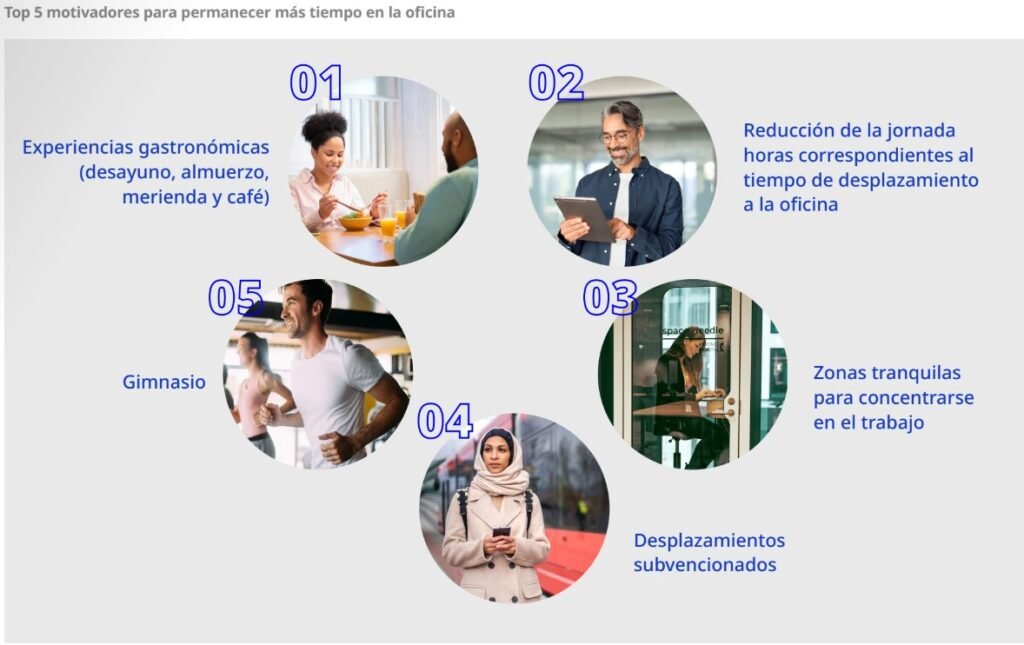
64% would come to the office more often if they found better facilities. The five key attractors: food and drink, focus zones, transport, gym and commute-free days.
- Chavsa takeaways: coffee bars, acoustic pods, showers and bicycle parking that improve the daily experience.
The ISS report details these five “motivators” in specific terms. It is not just about amenities: the quality of the physical environment directly influences people’s willingness to attend in person and participate actively. The office must offer positive experiences that cannot be replicated at home.
Well-managed flexibility
It is not just about the number of remote days: how the hybrid model is managed has a direct impact on motivation.
- Chavsa takeaways: hot-desking solutions with apps, plug & play furniture and configurable environments.
Flexibility should not be confused with a lack of structure. The report reveals that satisfaction with the hybrid policy has 5 times more influence than the frequency of remote working. Employees value being able to choose, but within a clear framework, with technological and leadership support.

The risks of ignoring in-person work
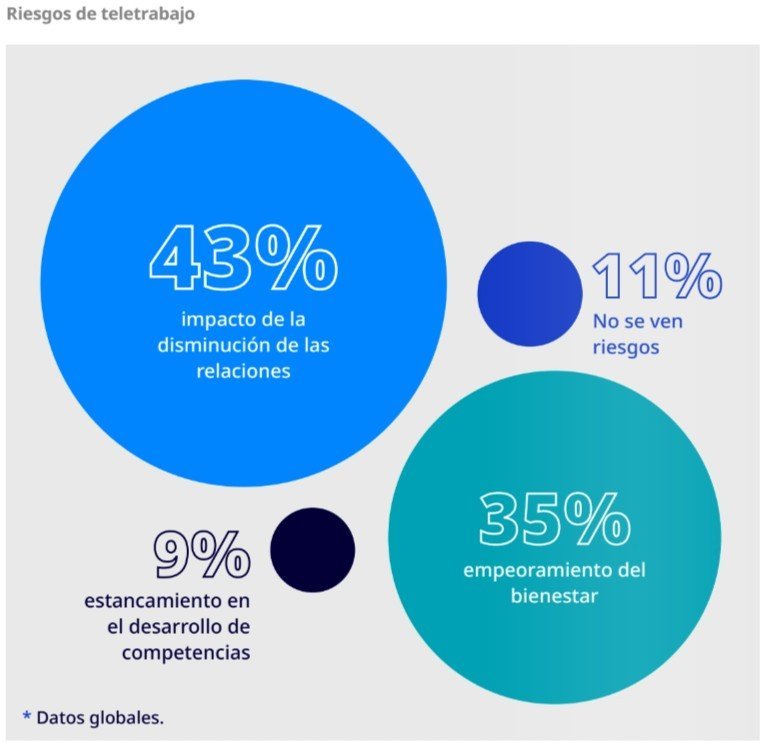
88% of employees perceive risks if remote working remains exclusive: loss of human connection and health problems stand out among the main ones.
- Chavsa takeaways: “central squares” and dynamic spaces for meetings, town halls and internal events.
A solid company culture needs shared moments. Reduced networking and weakened relationships are the biggest concerns. Designing spaces where connecting is natural rather than forced is essential to prevent that social wear.
Technology that thinks for you
Artificial intelligence already makes it possible to personalise environments and automate maintenance tasks.
- Chavsa takeaways: IoT sensors, digital twins and integrated BIM–FM management for flexible offices.
Beyond automation, AI opens the door to “nudging” design: spaces that learn from our routines to propose constant improvements. From adjusting the temperature to recommending ideal meeting days, the office of the future will be sensitive to individual preferences.
| “We are moving from a hybrid experience to a flexible experience
driven by AI.”
— Claus Christensen, EY Nordics
Profitable, demanded sustainability
84% consider it essential that their company leads on ESG. Energy efficiency and sustainable mobility top the preferences.
- Chavsa takeaways: circular materials, LEED/WELL certifications and charging points for e-bikes.
Sustainability is no longer only environmental, but also social. The report introduces ideas such as chrono-diversity and support for neurodivergent profiles in the working environment. Designing for everyone means thinking beyond efficiency: it means inclusion.
Case study #1 – Barclays
The bank redesigned its workspace to replicate the comfort of home and reduce absenteeism, relying on technology and support services. Takeaways: a unified app, digital concierge and spaces dedicated to physical and mental wellbeing.
This redesign shows how an office can be a lever for health and efficiency. Activities such as “alpaca walks” or collaborations with NGOs lift team morale and strengthen organisational culture. An exceptional experience creates committed employees.
| “Our goal is to provide a seamless, personalised working environment
that reflects the comfort of working from home.”
— Martin Smith, Barclays
Holistic wellbeing: health, ergonomics and active breaks
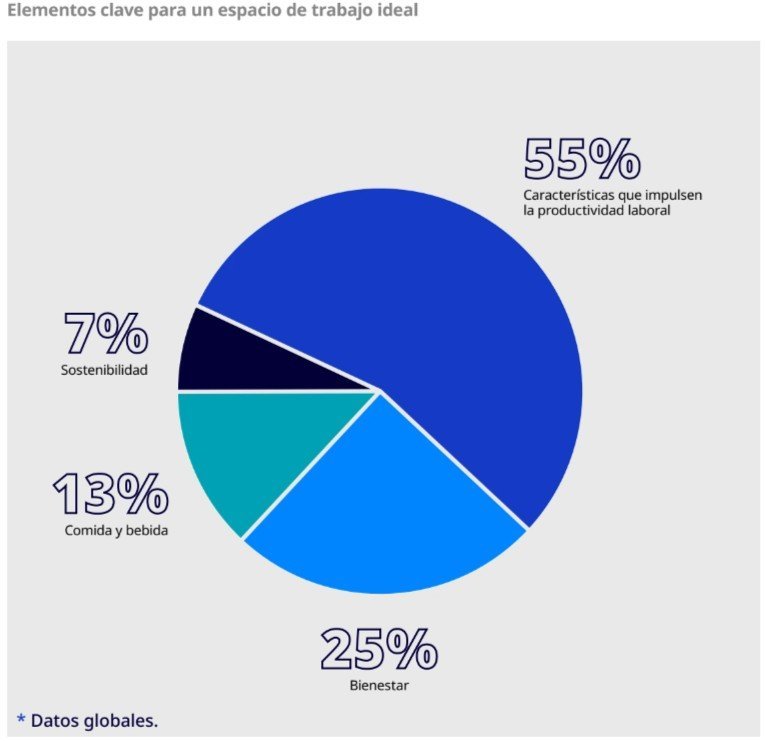
Health — physical and emotional — is one of the main reasons for redesigning flexible offices. Natural light, ergonomics and disconnection spaces are priorities.
- Chavsa takeaways: mindfulness zones, certified furniture, indoor routes and recovery areas.
The report stresses that wellbeing influences productivity more than many leaders estimate. An environment with positive stimuli reduces stress, lifts the mood and reinforces the ability to concentrate. Visual, acoustic and postural comfort is key.
ROI and metrics that convince the CFO
Beyond cost per m², the new ROI measures impact on talent, efficiency and wellbeing.
-
- Reduction in sick leave (Barclays)
- AI-driven optimisation
- Cost of replacing talent (6–9 months’ salary)
Investing in wellbeing and experience generates direct and indirect returns. From talent retention to reduced absenteeism, the metrics that weigh most with today’s CFO are not limited to savings, but to the strategic impact of the environment.
Data-driven governance and continuous feedback
Collecting metrics and adjusting in real time is key to adaptive, efficient spaces.
- Chavsa takeaways: weekly dashboards (density, energy, comfort) and quarterly pulse surveys.
The approach of companies such as EY combines operational data with experience data. They found, for example, that sharing a coffee or lunch with colleagues is highly correlated with job satisfaction. Designing from data allows more human decisions.
| “We found a strong correlation between the experience of having lunch or a
coffee with colleagues and the overall workplace experience.”
— Claus Christensen, EY Nordics
Hybrid leadership and meaningful design
The hybrid model does not work on rules alone: it needs leaders who inspire trust and encourage autonomy.
- Chavsa takeaways: spaces for mentoring, 1:1 rooms and accessible leadership zones.
The EY case shows that teams with empathetic leaders, who allow people to decide the “how and when” of work, reach higher levels of productivity and wellbeing. Hybrid leadership demands new tools… and new spaces.
| “We empower our employees to make decisions together with their
leaders and teams about where, when and how to work.”
— Claus Christensen, EY Nordics
Trend 2025–2030: from hybrid to “flexible + AI”
The new office does not ask where you work, but when and how. AI will be decisive in balancing presence, rest and performance.
- Chavsa takeaways: algorithms that recommend in-person days and “slow corners” to combat hyperconnectivity.
What we used to call hybrid is now becoming a flexible, living, personalised system. The design of the space must accompany this change, combining fluidity, privacy, connectivity and environments that allow the pace to slow down when necessary.
Express checklist (5 ISS actions)
1. Plan the hybrid model for the long term
2. Win back the office as a social hub
3. Invest in premium facilities + technology
4. Drive visible sustainability
5. Measure experience and adjust based on data
Conclusion
The workspaces of the future are defined by five axes: experience, wellbeing, technology, sustainability and data.
At Chavsa we turn them into tangible solutions — modular layouts, digital twins, internal cycle lanes and charging stations — that connect people with purpose.
Ready to transform your office? Let’s talk.