
When space stops keeping up… and starts making the difference
The reality is far more concrete: organisations have already defined how they work, but many offices still follow models that no longer fit that reality. The Global Workplace Survey 2025 puts figures and context to a feeling shared by many companies: not all offices work equally well, even if they are all occupied.
From our experience in the design and delivery of corporate spaces, this report is particularly relevant because it validates, with data, decisions that already prove decisive in projects. The workspace has stopped being a container and has become strategic infrastructure for the business.
But… what is the Global Workplace Survey and why do we use it as a reference?
The Global Workplace Survey 2025 is one of the most comprehensive international studies on workspaces. Produced by the Gensler Research Institute, it analyses how offices influence productivity, collaboration and wellbeing based on responses from more than 16,000 professionals.
Its value lies in the fact that it does not stop at theory or trends, but examines how the spaces people use every day actually perform. That is why we use it as a reference: the report’s data connects directly with what we see in our projects, allowing us to interpret office design from a practical, applicable perspective.
Let’s see what the data says:
Design as a real performance factor
The study is clear on this point. The quality of the working environment has a direct impact on how people feel and perform.
Users who rate their office positively show higher levels of:
– Commitment to the company
– Day-to-day satisfaction
– Ability to concentrate
– Willingness to collaborate
The Global Workplace Survey 2025 does not talk about abstract perceptions, but about clear correlations between space design and organisational results.
This confirms something fundamental: a well-designed office is not an operating expense, it is a structural investment.
Collaboration between people is not imposed, it is facilitated
Reading on through the report, a recurring idea appears: interaction between people does not depend solely on corporate culture, but on the physical environment that makes it possible.
The best-rated offices share a clear pattern:
– They facilitate unplanned encounters
– They offer spaces for working together without interference
– They combine open zones with more controlled areas
In many projects, simply introducing in-between spaces — neither fixed workstations nor closed rooms — transforms the daily dynamic.
Gensler’s report reinforces this idea: when the space keeps up, collaboration happens naturally.
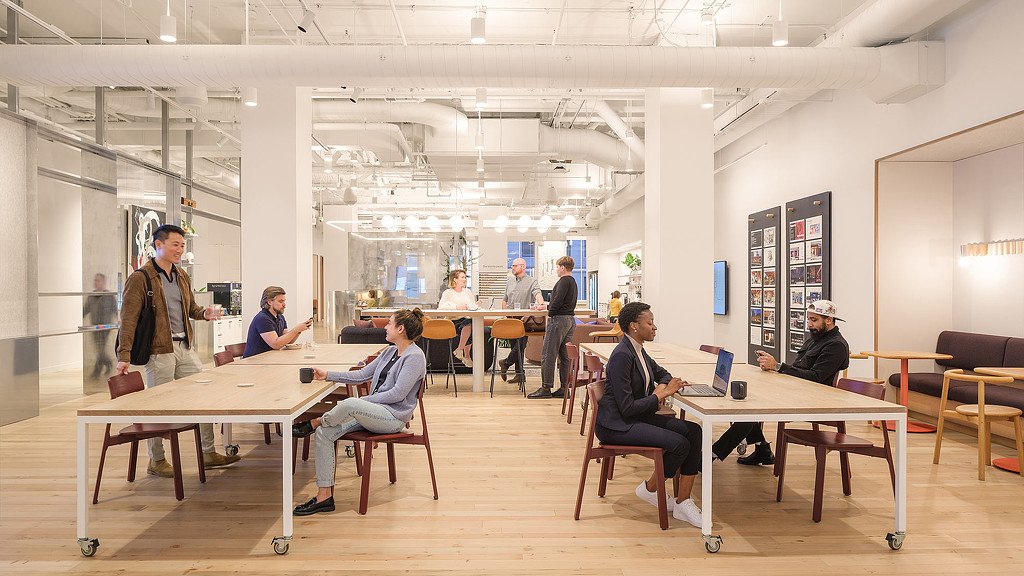
Diversity of spaces: responding to how the office is actually used
The GWS 2025 insists on a key point: there is no single way of working, and offices must reflect that.
The best-rated environments integrate different typologies:
– Individual focus zones
– Open collaborative spaces
– Rooms for in-person and hybrid meetings
– Informal areas for social exchange
This diversity is not a fashion, but an operational reality. Work today alternates focus, interaction, movement and pause. From a design and delivery standpoint, this means conceiving the project around real use, not standard layouts.
Environmental wellbeing: what sustains the experience long term
Among the factors users rate most highly, the report once again highlights elements that prove decisive on site:
– Well-harnessed natural light
– Acoustic comfort
– Stable thermal conditions
– Indoor air quality
These are aspects that are not always noticed on a first visit, but they define the daily experience of the space. The data analysed shows that when these elements are well resolved, the overall perception of the office improves significantly.
That is why more and more projects understand wellbeing not as an add-on, but as a design criterion from the outset.
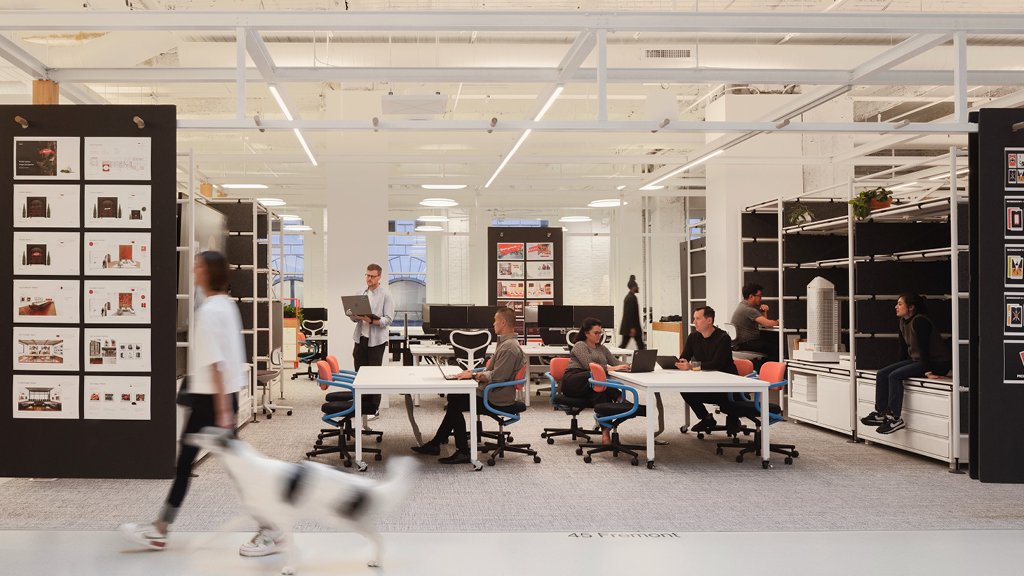
Offices aligned with talent retention
A link we already sensed and which the report confirms: quality of space and staying at the company.
People who work in well-designed offices show a greater intention to remain with the organisation.
In a context of intense competition for qualified profiles, the workspace becomes a silent but decisive factor. It does not replace corporate culture, but it reinforces it. And when it is poorly resolved, it weakens it.
In short: good design improves company performance
The Global Workplace Survey 2025 does not introduce a new trend; it consolidates a reality: the offices that work are those aligned with people and with the business.
Designing and building workspaces today means understanding behaviour, anticipating uses and executing with precision. When that happens, the office stops being a place you go to and becomes a space that adds value every day. At Chavsa we work precisely at that meeting point between analysis, design and execution. Every project confirms that when the environment is well thought out — from the layout to the construction details — the space stops being a constraint and becomes a support for the way each organisation works.
That is why we use studies like this as a reference: to test decisions and reinforce an approach based on experience, technical judgement and knowledge of real use. Because designing and building workspaces today is not about making offices, it is about creating environments that work.