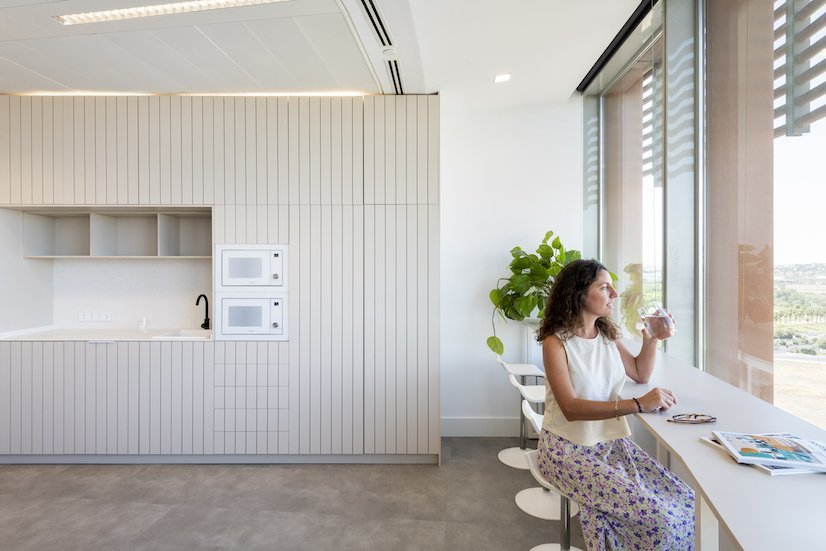
Today the office competes with remote working
If the office does not offer health, light, quiet, flexibility and a sense of belonging, it loses. Remote working is no longer a residual option: it is the office’s main competitor. The good news is that wellbeing is no longer a slogan or an aesthetic extra. Today it can be designed, built and measured.
That is where the WELL Building Standard certification comes in — an international system that translates something as intangible as “feeling good at the office” into objective, verifiable parameters.
WELL is not a fad, but a method that helps companies create healthier, more productive and more attractive spaces for their teams. In an environment where talent chooses where to work, investing in wellbeing is investing in results.
What WELL certification is and how it applies to offices
WELL, developed by the International WELL Building Institute (IWBI), assesses how a building impacts body and mind. It is not about consumption or kilowatts: it is about people.
Its 10 concepts translate into specific, measurable project decisions:
- Air and water: filtering, monitoring and planned maintenance.
- Light: respect for circadian rhythms, glare control and lighting scenes tailored to each activity.
- Movement: active design with visible staircases, fluid routes and micro-spaces that invite people to move.
- Thermal and acoustic comfort: zoning by use, sound-absorbing materials and solutions.
- Materials: low emissions, VOC-free and with traceable technical data sheets.
- Mind and community: biophilia, rest areas, healthy usage policies and a sense of belonging.
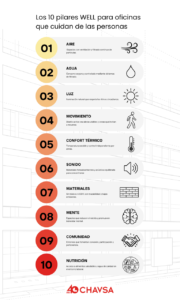
The result: a healthy, measurable and adaptable office, capable of evolving with people and new ways of working.
Business benefits of a WELL building
WELL certification is not measured only in points, but in business results. Every design decision has a direct impact on the indicators that matter to management and HR:
- Talent: spaces people want to use improve engagement and reduce turnover.
- Productivity and focus: less noise, better light and indoor climate → more concentration and performance.
- Absenteeism: clean air and proper ergonomics reduce discomfort, fatigue and sick leave.
- Employer brand: consistency with ESG commitments and a positive perception of the working environment.
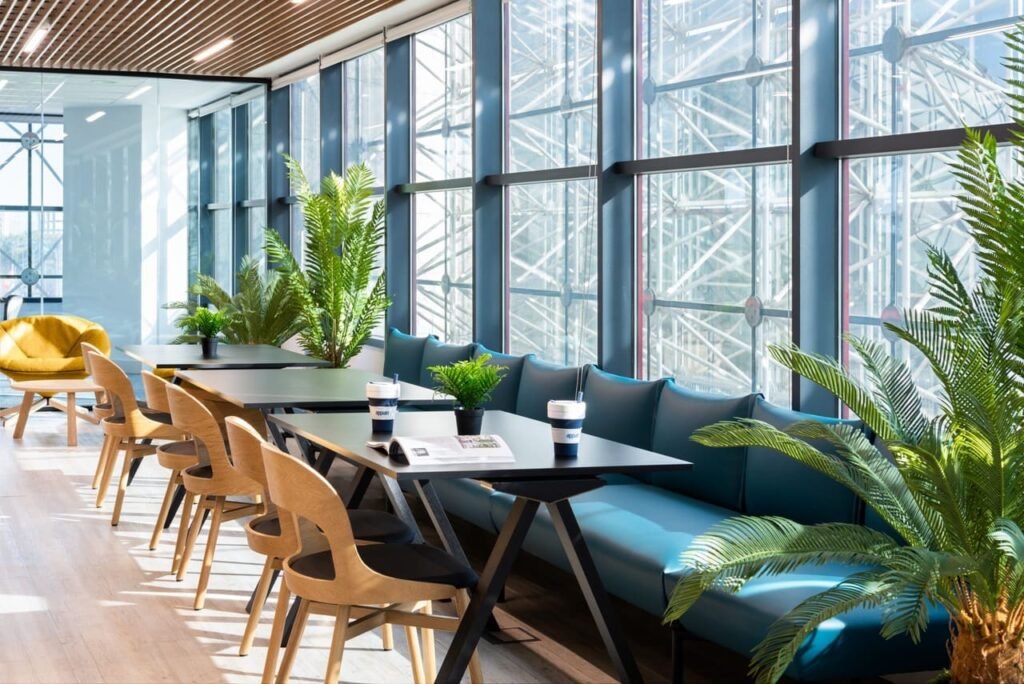
Wellbeing is not a cost; it is operational efficiency and corporate reputation. When the project is conceived from the outset with a WELL approach and specialist advice, every euro invested in design becomes measurable performance.
WELL does not replace LEED or BREEAM: it completes them
While LEED and BREEAM focus on the building and its environmental impact, WELL focuses on the people who inhabit it.
Together they offer a 360º vision: planet + people.
That is why many corporate headquarters opt for dual certification, combining sustainability and wellbeing. The result is more balanced offices, aligned with ESG strategies and with a clear message: looking after people is also looking after the business.
From design to delivery: how to implement WELL
Achieving WELL certification requires planning from minute zero. Architecture, engineering, construction and people management must work in coordination so that every decision contributes to the wellbeing of the whole.
Some key actions:
- Air and water control, with filtering systems and ongoing maintenance.
- Optimisation of natural light and acoustic control.
- Active design that encourages movement and reduces sedentary habits.
- Rigorous selection of healthy materials, free of toxic compounds.
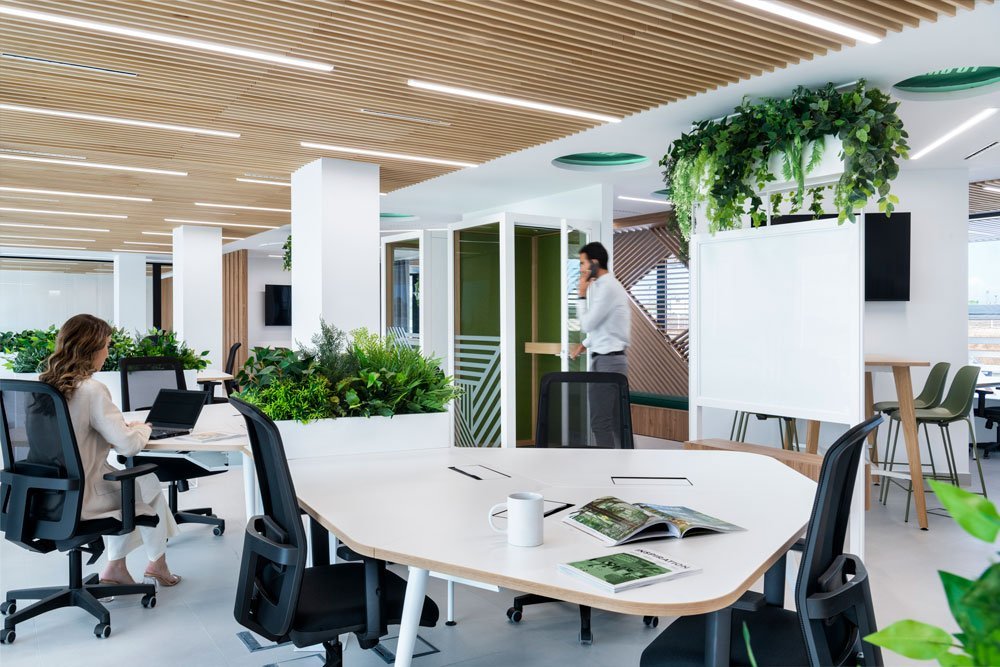
- Integration of greenery and biophilic design, bringing calm and connection.
Specialist companies such as CHAVSA support the whole process: from initial diagnosis to final handover, guaranteeing that the works meet the technical parameters and wellbeing criteria required by the standard.
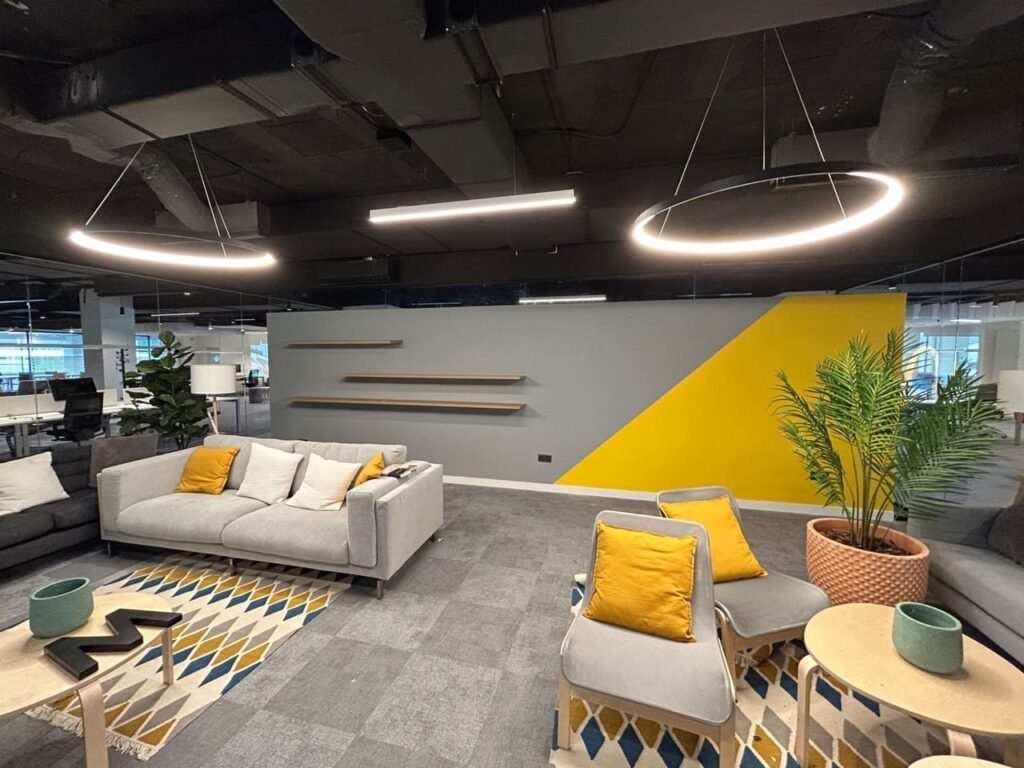
Success stories: offices that put people at the centre
CHAVSA has delivered numerous office projects that reflect WELL’s values: health, sustainability and flexibility. Each one shows that wellbeing can be built in from construction, not added at the end.
- CWT Spain – Full refurbishment of more than 2,100 m², with natural light as the protagonist, acoustic comfort and environmental efficiency. The new space reinforces corporate identity and improves the employee experience.
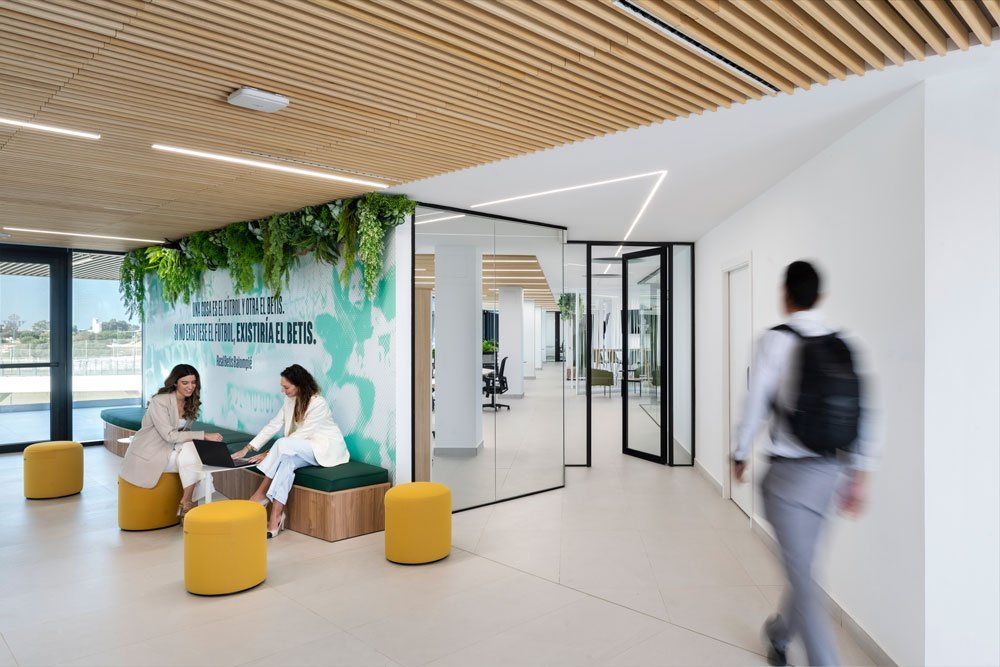
- Real Betis Balompié – 900 m² of offices at the Rafael Gordillo training ground, designed with ergonomics, brightness and visual connection between teams.
- Bester Energy – 650 m² fit-out in Torre Sevilla, with sustainable materials, thermal comfort and energy efficiency.
- CHINT Electrics Spain and SHELL – Flexible spaces adapted to hybrid working, designed for everyday wellbeing.
These projects reflect the same philosophy: designing and building offices that improve people’s lives and strengthen the corporate culture of those who occupy them.
The value of building spaces that improve lives
WELL certification proposes a new way of understanding the office. A sustainable space is no longer enough; the aim now is an environment where people feel good, physically and emotionally.
In a market where talent chooses, wellbeing becomes a competitive factor. WELL provides the technical framework, and CHAVSA translates it into real projects where health, performance and experience coexist.
The future of work may not depend on technology or the size of offices, but on something simpler: how people feel when they walk in every morning.